Why More Kids Are Becoming Nearsighted
Childhood myopia rates are rising quickly, especially among indoor, digital-age kids. Myopia, or nearsightedness, means distant objects look blurry while close-up things stay clear. Researchers around the world have seen more children becoming nearsighted, and at younger ages, than in past generations.
That matters because myopia usually gets worse as a child grows. The earlier it starts, the more time it has to progress. Higher levels of myopia are linked to a greater lifetime risk of eye problems such as retinal detachment, glaucoma, and cataracts. Thicker lenses are only part of the concern.
Top Causes
Myopia comes from a mix of genes and environment. The biggest factors include:
Excessive screen time
Phones, tablets, and gaming keep kids’ eyes focused up close for hours. Long stretches of near work without breaks are linked to myopia developing and getting worse.
Too little outdoor sunlight
Time outside appears to help protect children’s eyes. Researchers think bright natural light and looking at faraway objects both play a role. Many kids today spend far less time outdoors than kids did a generation ago.
Genetics
Children with one or both nearsighted parents are more likely to become nearsighted themselves. If you or your partner wear glasses for distance, keep a close eye on your child’s vision.
Close-up reading habits
Reading is wonderful, but holding books very close and reading for long periods without breaks puts extra demand on the eyes.
Simple Habits That Can Help
You don’t have to ban screens to make a difference. Try these everyday habits:
- Get outside. Encourage outdoor play every day, whether it’s the park, the beach, or the backyard. Don’t forget sunglasses and a hat.
- Follow the 20-20-20 rule. Every 20 minutes of close work, look at something 20 feet away for 20 seconds.
- Keep a healthy distance. Encourage kids to hold books and devices at a comfortable distance, not right up to their face.
- Set screen limits. Build in breaks, and keep devices out of the bedroom at night.
- Schedule regular eye exams. Catching myopia early gives you more options.
How We Control Myopia Progression
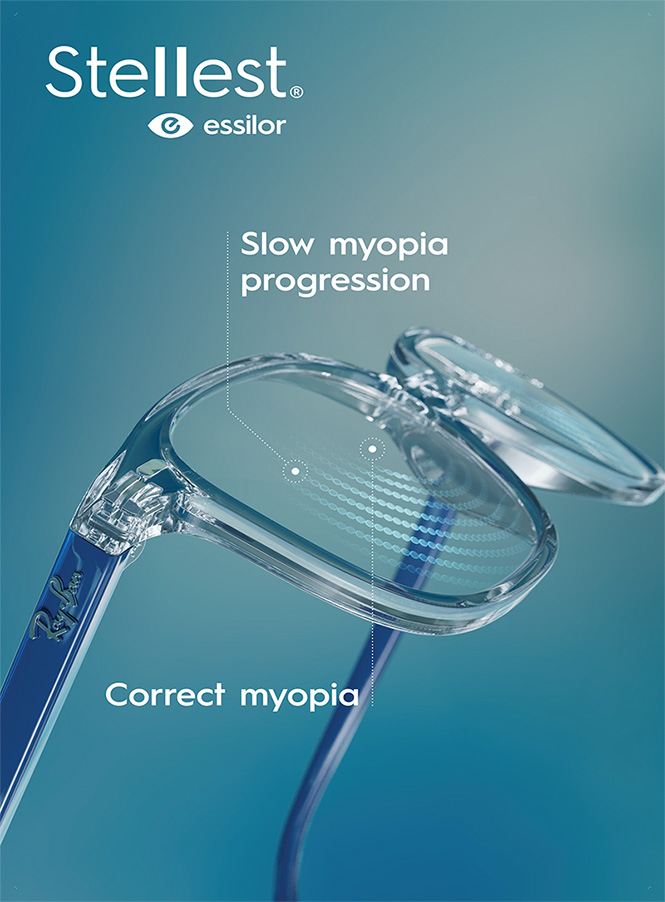
Glasses and regular contacts help kids see clearly, but they don’t slow myopia from getting worse. Myopia control treatments are designed to do that. At Fort Lauderdale Eye Care and Eyewear, options include:
- Stellest™ lenses. Eyeglass lenses designed to slow myopia progression in children.
- Ortho-K. Custom overnight contact lenses that gently reshape the front of the eye while your child sleeps, so they can see clearly during the day without glasses or contacts.
- MiSight® 1 day. Daily disposable soft contact lenses designed for myopia control.
- Atropine therapy. Low-dose atropine eye drops used at bedtime. Using atropine for myopia control is off-label, and we’ll explain what that means.
Every child is different, and results vary. No treatment can promise to stop or reverse myopia. We’ll talk through which option fits your child’s age, prescription, and lifestyle. Learn more on our Myopia Control page.
Signs Your Child May Be Nearsighted
Kids often don’t realize their vision is blurry. Watch for squinting, sitting close to the TV, trouble seeing the board, headaches, or eye rubbing. Our pediatric eye exams check for myopia and other vision problems. We also offer a Free Kids Vision Screening for ages 5–17.
Schedule a Myopia Evaluation
Want to know whether your child is a good candidate for myopia control? Call or Text 954-763-2842 to reach our family eye doctors in Fort Lauderdale and schedule a consultation. Parents of children ages 5–12 can start with a free virtual myopia control consultation, or book a full eye exam for your child. You can also request an appointment online.