Kids rarely tell us they can’t see well. Most of the time, they don’t know the world is supposed to look sharper. At Fort Lauderdale Eye Care and Eyewear, we make eye exams relaxed and friendly for children and teens, and we explain everything to parents in plain language.
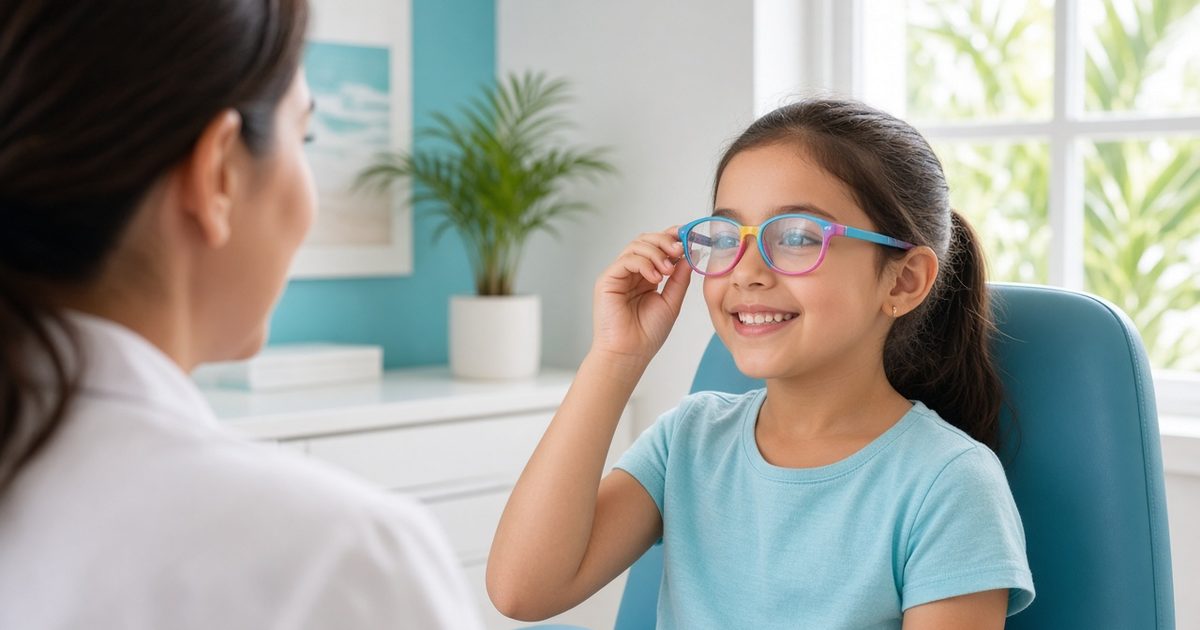
Why Children Need Regular Eye Exams
So much of what kids learn in the classroom, on the field, and on screens depends on their vision. A child who struggles to see the board or keep words in focus may get frustrated, lose interest in reading, or be mistaken for having a learning or attention problem.
School and pediatrician screenings are helpful, but they usually check only how clearly a child sees across the room. They can miss farsightedness, astigmatism, eye teaming problems, focusing issues, and eye health concerns. A comprehensive eye exam looks at all of these.
When Should My Child Have an Eye Exam?
The American Optometric Association recommends:
- An eye exam between 6 and 12 months of age
- At least one exam between ages 3 and 5
- An exam before starting first grade
- Then an eye exam every year through age 18
Your optometrist may suggest more frequent visits if your child wears glasses, is nearsighted and getting worse, or has a family history of eye conditions. Not sure what’s right for your child’s age? Call or Text 954-763-2842 and we’ll help.
Signs Your Child May Have a Vision Problem
Watch for:
- Squinting, tilting the head, or covering one eye
- Sitting very close to the TV or holding books and tablets close
- Frequent eye rubbing, headaches, or tired eyes after reading
- Losing their place while reading or avoiding close work
- An eye that turns in, out, up, or down
- Trouble seeing the board or noticing faraway objects
- A drop in grades or difficulty paying attention in class
If you notice any of these, don’t wait for the next school screening. Schedule an exam.
What Happens at a Child’s Eye Exam
We keep things simple and fun. Depending on your child’s age, the exam may include:
- Vision testing with letters, pictures, or shapes for younger kids
- Prescription checks to look for nearsightedness, farsightedness, and astigmatism
- Eye teaming and focusing tests to see how well the eyes work together up close and far away
- Eye health evaluation of the front and back of the eyes
- Lazy eye (amblyopia) and eye turn checks, which respond best when found early
Sometimes we use eye drops to relax focusing and get an accurate prescription. Parents are welcome in the room, and we’ll go over the results with you before you leave.
Free Kids Vision Screening (Ages 5–17)
We offer a Free Kids Vision Screening for ages 5–17. It’s a quick, no-cost check that can flag possible vision problems. A screening isn’t a full eye exam. If we find something that needs a closer look, we’ll recommend a comprehensive exam and explain why.
Nearsightedness and Myopia Control
Nearsightedness (myopia) is becoming more common in children, and it often gets worse as kids grow. Higher levels of myopia later in life are linked to a greater risk of eye problems such as retinal detachment, glaucoma, and cataracts. Myopia control treatments are designed to slow how fast a child’s prescription increases. Options we offer include:
- Ortho-K, special overnight contact lenses that gently reshape the front of the eye
- MiSight® 1 day, daily soft contact lenses designed for myopia control
- Stellest® lenses, eyeglass lenses designed to slow myopia progression
- Low-dose atropine eye drops, a prescription option that is used off-label for myopia control
Results vary from child to child, and no treatment can promise to stop myopia. We’ll help you weigh the pros and cons. Parents of children ages 5–12 can start with a free virtual myopia control consultation by video or phone. Learn more on our Myopia Control page.
Glasses and Contacts for Kids
Our optical team helps kids find frames that fit well, stand up to everyday life, and look great. You’ll get a fast turnaround from our local lab, so your child isn’t waiting long to see clearly. For older kids and teens who play sports or want a break from glasses, we also fit contact lenses and teach safe lens care.
Pediatric Eye Exam FAQs
At what age should my child have their first eye exam?
The American Optometric Association recommends a first exam between 6 and 12 months, at least one between ages 3 and 5, and one before first grade, then yearly exams through age 18. Call or Text 954-763-2842 to ask about scheduling for your child’s age.
Is the school vision screening enough?
A school screening is a helpful first check, but it can miss problems like farsightedness, eye teaming issues, and eye health concerns. A comprehensive eye exam gives a complete picture.
What is the difference between the Free Kids Vision Screening and an eye exam?
The Free Kids Vision Screening for ages 5–17 is a quick check that can flag possible problems. A comprehensive eye exam measures your child’s exact prescription and checks the health of their eyes.
Can nearsightedness in kids be slowed down?
Myopia control options such as Ortho-K, MiSight 1 day contact lenses, Stellest eyeglass lenses, and low-dose atropine drops (an off-label use) are designed to slow progression. Results vary, and none of them reverses myopia. For children ages 5–12, a free virtual myopia control consultation is a good first step.
Will my child need eye drops?
Sometimes. Drops that relax focusing help us measure an accurate prescription, especially in younger children. We’ll explain what to expect before we use them.
Book Your Child’s Eye Exam
Help your child see clearly at school, at play, and everywhere in between. Request an appointment online, or Call or Text 954-763-2842.
Fort Lauderdale Eye Care and Eyewear · 1567 South Federal Highway, Fort Lauderdale, FL 33316