Many parents are surprised to learn that a vision screening and a comprehensive eye exam are not the same thing. Both have a place in your child’s care, but they answer very different questions. At Fort Lauderdale Eye Care and Eyewear, we offer both a free kids vision screening and full pediatric eye exams, so we hear this question from Fort Lauderdale families all the time: “My child passed the school screening. Do they still need an eye exam?” Here is what each one does, what it can miss, and how to decide what your child needs.
What Is a Vision Screening?
A vision screening is a quick check designed to flag children who may have a vision problem and should be seen for a full exam. Screenings happen at school, at the pediatrician’s office, at community events and here at our office. They usually take only a few minutes.
A typical screening may include:
- Reading letters or shapes on a chart from a distance
- A quick look at how the eyes line up and move together
- Sometimes a basic check of color vision or depth perception
Screenings are valuable because they are fast and easy, and they catch many children who need help. But a screening is a sorting tool, not a diagnosis. It tells you whether your child should be checked more closely. It does not tell you that your child’s eyes are healthy or that their vision is working well for school.
What Is a Comprehensive Pediatric Eye Exam?
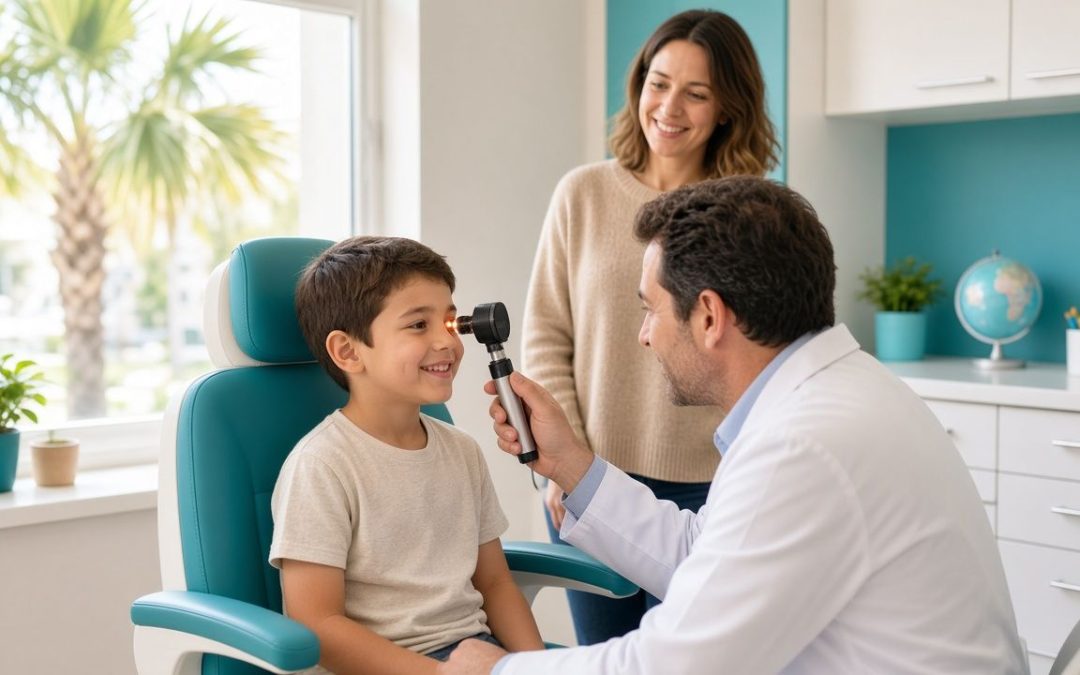
A comprehensive eye exam is performed by an eye doctor and looks at the whole visual system, not just how clearly your child can read a chart across the room. Depending on your child’s age and needs, a pediatric eye exam may include:
- Refraction: measuring whether your child is nearsighted, farsighted or has astigmatism, and determining an accurate prescription if one is needed
- Near vision and focusing: checking how well the eyes focus up close for reading, homework and screens
- Eye teaming and tracking: testing how the two eyes work together and follow a line of text
- Eye alignment: looking for an eye turn (strabismus) or a “lazy eye” (amblyopia)
- Eye health: examining the front and back of the eye, including the retina and optic nerve, sometimes with dilating drops
Because the doctor is measuring and examining rather than just sorting, an exam can find problems a screening is not designed to catch, and it ends with a clear plan: no treatment needed, glasses, contact lenses, myopia control or further follow-up.
What Can a Screening Miss?
A child can pass a distance chart and still struggle with their eyes. Some issues that a basic screening may not pick up include:
- Farsightedness: many farsighted children can see a distance chart well but work hard to focus up close, which can lead to tired eyes, headaches or avoiding reading
- Focusing and eye teaming problems: these can make reading uncomfortable even when clarity seems fine
- Mild astigmatism or a difference between the two eyes: one strong eye can cover for a weaker one during a quick test
- Eye health conditions: a screening does not include a full look inside the eye
Children also rarely complain about their vision. They assume the way they see is the way everyone sees. That is why watching for signs at home matters too.
Signs Your Child Should Have a Full Eye Exam
Schedule a comprehensive exam, even if your child recently passed a screening, if you notice:
- Squinting, sitting very close to the TV or holding books and tablets close
- Frequent eye rubbing, headaches or tired eyes after reading
- Covering one eye, tilting the head or an eye that seems to drift
- Losing their place while reading or using a finger to follow along
- Avoiding homework, reading or other close-up tasks
- A family history of nearsightedness, an eye turn or other eye conditions
If your child is nearsighted, a full exam is also the starting point for myopia control, which uses special lenses or other treatments to help slow how quickly nearsightedness progresses.
Our Free Kids Vision Screening (Ages 5–17)
Fort Lauderdale Eye Care and Eyewear offers a free kids vision screening for ages 5–17. It is a convenient way to check in on your child’s vision, especially if you are not sure whether a full exam is needed yet. If anything in the screening suggests a problem, we will explain what we found and recommend next steps.
For children ages 5–12 who are nearsighted or at risk, we also offer a free virtual myopia control consultation, so you can learn about the options from home.
How Often Should Kids Have Eye Exams?
We recommend a comprehensive eye exam every year for school-age children, or sooner if you notice any of the signs above or your eye doctor recommends a different schedule. Children’s eyes change as they grow, and a yearly exam helps catch changes early, before they affect learning, sports or comfort. Many families find it easiest to schedule exams before the school year starts.
If your child wears glasses, we offer kid-friendly frames and durable lenses, with fast turnaround from our local lab. Browse our eyeglasses selection to see what is available.
Frequently Asked Questions
My child passed the school vision screening. Do they still need an eye exam?
Passing a screening is good news, but it does not replace a comprehensive exam. Screenings mainly check distance vision and may miss focusing problems, farsightedness and eye health issues. We recommend yearly eye exams for school-age children.
Is the free kids vision screening the same as an eye exam?
No. Our free kids vision screening for ages 5–17 is a quick check to see whether your child may need a closer look. A comprehensive pediatric eye exam is performed by an eye doctor and includes a full prescription measurement and an eye health evaluation.
Will my child’s eyes be dilated?
Sometimes. Dilating drops help the doctor see inside the eye and measure the prescription accurately, especially in young children whose eyes focus strongly. We will let you know if dilation is recommended and what to expect.
Does insurance cover kids’ eye exams?
Coverage depends on your plan. Visit our insurance information page or contact our office and we will help you check your benefits.
Schedule Your Child’s Eye Exam in Fort Lauderdale
Whether you want to start with a free screening or book a full pediatric eye exam, our team at Fort Lauderdale Eye Care and Eyewear is here to help your child see clearly and comfortably. Call or Text 954-763-2842, or request an appointment online.