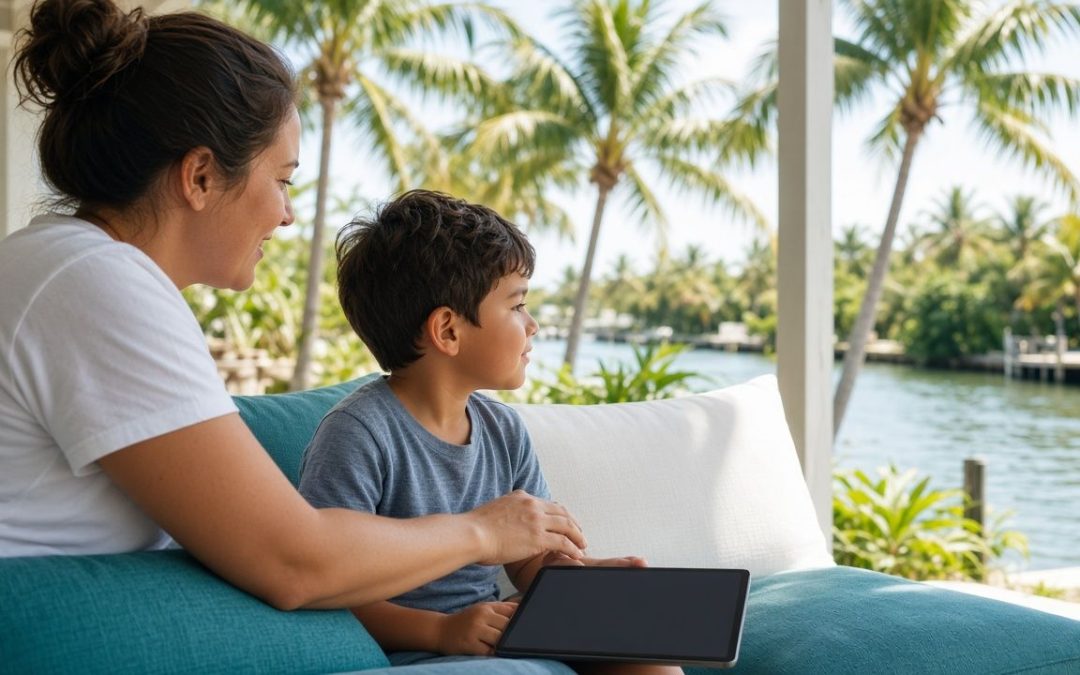
Tablets for homework, laptops for school, phones for games and video calls with grandparents: screens are part of nearly every child’s day. Many Fort Lauderdale parents ask us whether all that screen time is hurting their kids’ eyes. The honest answer is that screens are not known to permanently damage children’s eyes, but long stretches of close-up screen use can cause uncomfortable symptoms, and lots of near work with little time outdoors is linked to nearsightedness. At Fort Lauderdale Eye Care and Eyewear, we help families find a healthy balance. Here is what parents should know.
What Screen Time Does to Kids’ Eyes
When children focus on something close, such as a tablet, phone or book, the focusing muscles inside the eyes work harder than when they look across a room. Kids also tend to blink less while they concentrate on a screen. Over a long session, this combination can lead to what is often called digital eye strain. Common signs include:
- Tired, sore or burning eyes
- Dry or watery eyes and more eye rubbing
- Headaches, especially later in the day
- Blurry vision when looking up from the screen
- Neck and shoulder discomfort from leaning in close
These symptoms usually ease with breaks and better habits. If they keep coming back, it can be a sign that your child has an uncorrected prescription or a focusing or eye teaming problem that makes close work harder than it should be.
Screens, Near Work and Nearsightedness
Nearsightedness (myopia) has become much more common in children around the world. Researchers believe genetics and environment both play a role. Studies suggest that a lot of close-up work combined with little time outdoors is associated with a higher chance of developing myopia, and that more time spent outside in daylight may help lower that risk. Screens are one part of the near-work picture, along with reading and homework.
This does not mean screens alone cause nearsightedness, and children still need to read and learn. It does mean that balance matters. If your child is already nearsighted, or both parents are, ask us about myopia control. Treatments such as specially designed glasses and contact lenses can help slow how quickly nearsightedness progresses in many children.
What About Blue Light?
Blue light glasses are widely marketed for kids, but current evidence does not show that the blue light from screens damages children’s eyes. Eye strain from screens comes mostly from long focusing sessions and reduced blinking, not from the color of the light. Screen use close to bedtime can make it harder for some children to fall asleep, so it is a good idea to put devices away an hour or so before bed. If your child needs glasses, we can talk through lens options, including anti-reflective coatings such as Crizal that reduce glare and reflections, which many people find more comfortable for screen work.
Healthy Screen Habits for Kids
A few simple habits can make screen time more comfortable and support healthy vision:
- Follow the 20-20-20 rule: every 20 minutes, look at something about 20 feet away for at least 20 seconds. Setting a timer helps younger kids remember.
- Keep screens at a comfortable distance: encourage kids to hold tablets and phones at arm’s length rather than close to their face, and to sit back from laptops.
- Remind them to blink: full blinks help keep eyes moist, especially in air-conditioned rooms.
- Get outside every day: outdoor play gives eyes a chance to focus far away and is good for overall health. In Fort Lauderdale, pair outdoor time with sunglasses and a hat for UV protection.
- Light the room well: avoid using screens in the dark, and position screens to reduce glare from windows.
- Set limits that fit your family: the American Academy of Pediatrics encourages families to create a media plan with consistent limits and screen-free times, such as meals and bedtime.
Signs Your Child Should Have an Eye Exam
Children rarely say they cannot see well. Schedule a pediatric eye exam if you notice:
- Squinting at the screen or the board at school
- Holding devices very close or sitting close to the TV
- Frequent headaches, eye rubbing or complaints of tired eyes
- Covering one eye or tilting the head to see
- Avoiding reading or losing their place often
We recommend a comprehensive eye exam every year for school-age children. A full exam checks your child’s prescription, focusing, eye teaming and eye health, which a quick screening cannot fully do. Fort Lauderdale Eye Care and Eyewear also offers a free kids vision screening for ages 5–17 and a free virtual myopia control consultation for children, so you can learn about options from home. If your child needs glasses, we offer kid-friendly frames with fast turnaround from our local lab.
Frequently Asked Questions
Can too much screen time permanently damage my child’s eyes?
Screens are not known to cause permanent eye damage. They can cause temporary eye strain, dryness and headaches. Lots of near work with little outdoor time is associated with nearsightedness, so balance and regular eye exams are important.
Does my child need blue light glasses?
Current evidence does not show that blue light from screens harms children’s eyes, so blue light glasses are not usually needed for eye health. Breaks, good posture and an up-to-date prescription do more to keep screen time comfortable.
How much outdoor time is helpful?
Every bit of daily outdoor play helps. Your eye doctor can give advice based on your child’s age, prescription and family history, especially if nearsightedness runs in the family.
Can glasses help with screen eye strain?
If your child has an uncorrected prescription or a focusing problem, the right glasses can make close work much more comfortable. A comprehensive eye exam is the best way to find out.
Book Your Child’s Eye Exam in Fort Lauderdale
If screen time is leaving your child with tired eyes or headaches, or you simply want to make sure their vision is on track, our team at Fort Lauderdale Eye Care and Eyewear is here to help. Call or Text 954-763-2842, or request an appointment online.