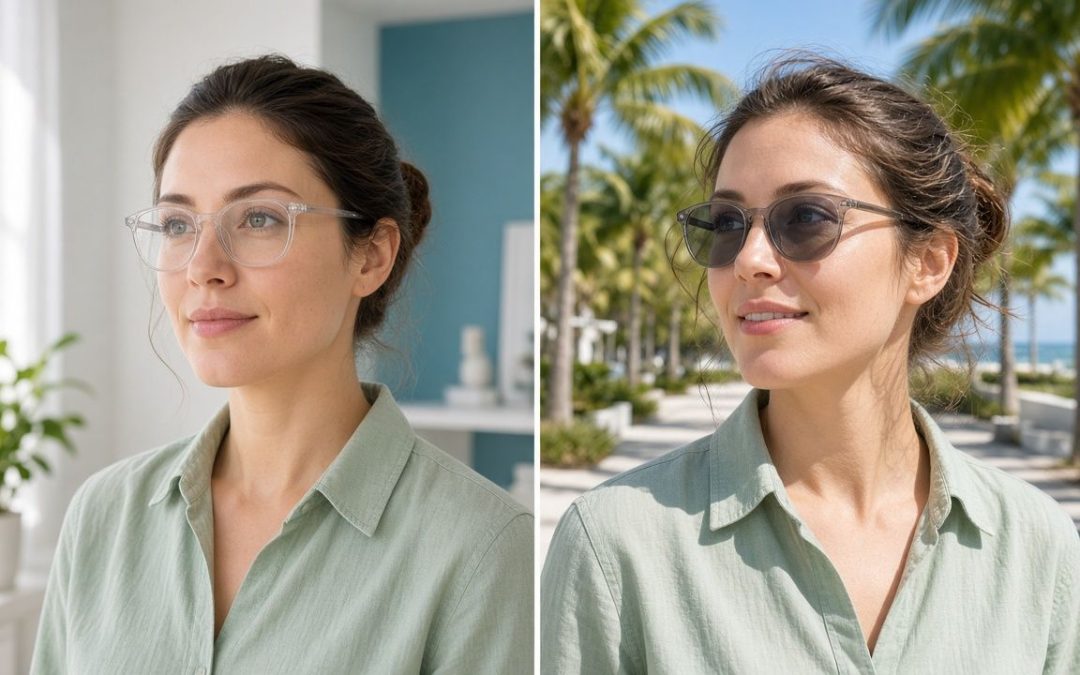
Living in Fort Lauderdale means bright sun almost every day of the year. You walk out of the office into glare off the water, step back inside a store, then head out to the car again. Switching between regular glasses and prescription sunglasses all day gets old fast. Light-adaptive lenses, also called photochromic lenses, solve that problem by darkening outdoors and clearing indoors. At Fort Lauderdale Eye Care and Eyewear, we fit genuine Transitions lenses, and in this guide we explain how they work and why the brand behind your lenses matters.
What Are Light-Adaptive (Photochromic) Lenses?
Light-adaptive lenses contain special molecules that react to ultraviolet (UV) light. When you step outside, UV light causes those molecules to change shape, which tints the lens. When you go back indoors and the UV is gone, the molecules return to their original state and the lens clears again.
The result is one pair of glasses that works like clear eyeglasses inside and tinted lenses outside. They can be made in single vision, bifocal and progressive prescriptions, and they block UV rays whether they are clear or dark.
Transitions vs. Generic Light-Adaptive Lenses
“Transitions” is a brand name, but many people use it to describe any lens that darkens in the sun. Not every light-adaptive lens is a genuine Transitions lens. Many lower-cost generic photochromic lenses are available, and they do not all perform the same way. Here are a few areas where quality can differ:
- How dark they get outdoors: Lens technology affects how much tint you get on a bright Florida afternoon.
- How clear they are indoors: A good light-adaptive lens should look and feel like a clear lens inside, without a leftover tint.
- How fast they change: Speed of darkening and, especially, fading back to clear makes a big difference when you move in and out all day.
- Heat performance: Photochromic lenses can behave differently in high heat, which matters in South Florida.
- Consistency over time: Quality materials and testing help lenses perform consistently over the life of your glasses.
Transitions is the original and best-known name in light-adaptive lenses, and the brand offers several product lines designed for different needs. When you order your lenses with us, you know you are getting genuine Transitions, not a look-alike.
Popular Transitions Options
Every patient’s eyes and lifestyle are different, so our opticians will help you choose the right Transitions product. Options generally include:
- Everyday light-adaptive lenses: Clear indoors and tinted outdoors, a great all-around choice for most wearers.
- Extra-dark options: Designed for people who are very sensitive to light or who want a darker tint outdoors.
- Polarized options: Some Transitions lenses add polarization outdoors to help cut glare off water, sand and roads.
- Color choices: Classic gray and brown, plus fashion colors on many lens designs.
Ask us which Transitions lenses are available in your prescription and frame. We can show you samples in the office so you can see the difference for yourself.
Do Light-Adaptive Lenses Work in the Car?
This is one of the most common questions we hear. Most car windshields block much of the UV light that activates photochromic lenses, so many light-adaptive lenses darken only slightly, or not at all, while you drive. Some Transitions products are designed to darken more behind the windshield. If you spend a lot of time driving, tell us so we can recommend the best option, or consider a dedicated pair of prescription sunglasses for the road.
Pairing Transitions with Crizal and Custom Progressives
Light-adaptive lenses work even better with the right coatings and lens designs. We often recommend:
- Crizal anti-reflective coatings: Crizal helps reduce glare from headlights and screens, resists smudges and scratches, and makes lenses easier to clean.
- Custom progressive lenses: If you need help seeing far away and up close, Transitions can be combined with custom Varilux or Hoya progressive lenses for one pair that does it all.
Because we work with a local lab, we offer fast turnaround from our local lab, along with careful measurements and quality checks on every pair.
Are Light-Adaptive Lenses Right for You?
Transitions lenses can be a great fit if you:
- Go in and out of buildings throughout the day
- Find bright light uncomfortable or squint a lot outdoors
- Want UV protection without carrying a second pair of glasses
- Have kids who tend to lose or forget their sunglasses
They may not replace sunglasses for everyone. If you spend long hours on the water or at the beach, polarized prescription sunglasses may still be your best choice for maximum glare control. Many of our patients choose both. You can browse frame options on our eyeglasses page.
Frequently Asked Questions
Do Transitions lenses protect against UV rays?
Yes. Transitions lenses block UVA and UVB rays both indoors and outdoors, whether the lens is clear or dark.
Can children wear Transitions lenses?
Yes. Light-adaptive lenses can be a practical choice for kids who play outside and move between the classroom and the playground. Ask us about options during your child’s eye exam.
How long do light-adaptive lenses take to change?
They begin to darken soon after you step into sunlight and gradually fade back to clear indoors. Speed varies by lens type, temperature and light conditions.
Are Transitions lenses covered by vision insurance?
Coverage depends on your plan. Many vision plans include some benefit toward lens options. Visit our insurance information page or contact our office and we will help you understand your benefits.
Try Genuine Transitions in Fort Lauderdale
If you are tired of switching glasses every time you walk outside, genuine Transitions lenses may be the answer. The team at Fort Lauderdale Eye Care and Eyewear will check your vision, help you choose a frame and fit you with the Transitions lenses that suit your lifestyle.
Call or Text 954-763-2842 or request an appointment online today.