Glaucoma is sometimes called the “silent thief of sight.” In its most common form, it causes no pain and no early warning signs, and it slowly takes away side (peripheral) vision before most people notice anything is wrong. At Fort Lauderdale Eye Care and Eyewear, our optometrists test for glaucoma during routine eye exams and help patients manage the condition over the long term.
What Is Glaucoma?
Glaucoma is a group of eye diseases that damage the optic nerve, the cable that carries images from the eye to the brain. It is often linked to higher-than-normal pressure inside the eye, but glaucoma can also happen when eye pressure is in the normal range.
- Open-angle glaucoma is the most common type. It develops slowly and usually has no symptoms until vision loss is advanced.
- Angle-closure glaucoma is less common. It can come on suddenly and is a medical emergency (see the warning signs below).
Vision lost to glaucoma can’t be restored. The good news is that early detection and consistent treatment can help slow or prevent further damage for many people.
Who Is at Higher Risk?
Anyone can develop glaucoma, but your risk is higher if you:
- Are over age 40, with risk increasing as you get older
- Have a parent, brother, or sister with glaucoma
- Are of African, Hispanic, or Asian heritage
- Have diabetes or high blood pressure
- Have high eye pressure or thin corneas
- Are very nearsighted or farsighted
- Have had an eye injury or eye surgery
- Use steroid medications, especially steroid eye drops, for a long time
If any of these apply to you, regular eye exams are especially important. Let us know about your family history when you book.
How We Test for Glaucoma
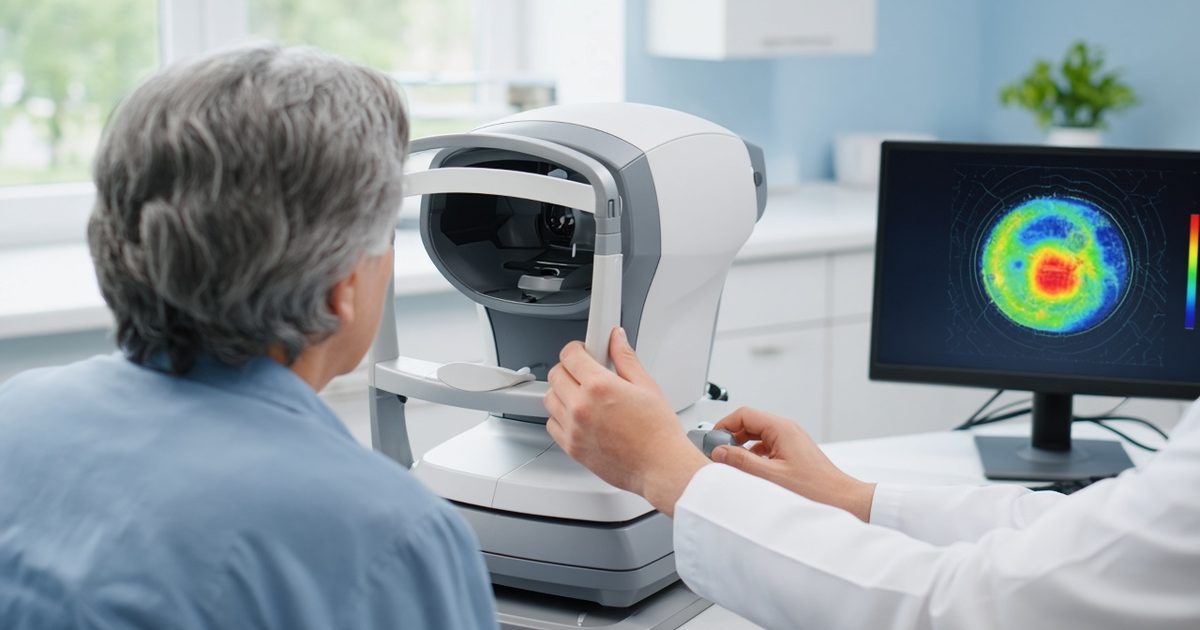
There isn’t one single test for glaucoma. Your optometrist looks at several pieces together:
- Eye pressure testing measures the pressure inside your eye.
- Optic nerve evaluation and imaging let us look closely at the optic nerve and record its appearance to compare over time.
- Visual field testing maps your side vision to find blind spots you may not notice.
Your optometrist may recommend other tests depending on your results. Because glaucoma changes slowly, comparing results from visit to visit is one of the most helpful tools we have.
Managing Glaucoma
There’s no cure for glaucoma, but treatment can lower eye pressure and help protect the vision you have. Treatment often starts with prescription eye drops used every day. If you need laser treatment or surgery, we work with local glaucoma specialists and help coordinate your care.
Glaucoma care is a long-term partnership. Ongoing visits let us check your eye pressure, optic nerve, and visual field, see how well your treatment is working, and adjust it if needed.
Tips for Using Glaucoma Eye Drops
- Use your drops at the same times each day. Linking them to a daily habit, like brushing your teeth, can help.
- Wash your hands first, and don’t let the bottle tip touch your eye.
- After putting in a drop, close your eye and gently press on the inner corner for a minute to help the drop stay in the eye.
- If you use more than one drop, wait about five minutes between them.
- Never stop your drops on your own. Tell us about side effects or trouble paying for medication so we can talk about options.
- Bring your drops or a list of them to every visit.
When Glaucoma Is an Emergency
Angle-closure glaucoma can cause sudden, severe eye pain, headache, nausea or vomiting, blurred vision, halos around lights, and a red eye. If you have these symptoms, go to the nearest emergency room or call 911 right away. Sudden vision loss of any kind is also an emergency.
Glaucoma FAQs
Can I have glaucoma without symptoms?
Yes. The most common type of glaucoma usually has no symptoms until vision loss is advanced. That’s why regular eye exams with glaucoma testing are so important.
Is the “air puff” test enough to rule out glaucoma?
Eye pressure testing is one important piece, but it isn’t enough on its own. Some people have glaucoma with normal eye pressure. We also look at the optic nerve and may check your visual field.
How often should I be checked for glaucoma?
Most adults should have an eye exam every year. If you have glaucoma or are at higher risk, your optometrist may recommend more frequent visits.
Can glaucoma be cured?
No. Vision lost to glaucoma can’t be restored, but treatment such as prescription eye drops, laser, or surgery can help slow or prevent further damage for many people.
Does glaucoma run in families?
Having a parent, brother, or sister with glaucoma raises your risk. Tell your optometrist about your family history so your exam can be tailored to you.
Schedule a Glaucoma Evaluation
If it’s been a while since your last eye exam, or glaucoma runs in your family, now is a good time to be checked. Request an appointment online, or Call or Text 954-763-2842. Related reading: The Silent Signs of Glaucoma You Shouldn’t Ignore.
Fort Lauderdale Eye Care and Eyewear · 1567 South Federal Highway, Fort Lauderdale, FL 33316